
Developing Successful Study Habits, Homework Crunch or Feeling Stressed? + Setting Goals
Developing Successful Study Habits
At MacNeill Secondary, we believe the primary focus for students should be learning and achieving academic success; however, we also want students to maintain a balance between studying and other activities and pursuits. Success in school relies on a strong and effective partnership between the student, the school and the home. Active support from parents/guardians in the completion of homework is recommended and encouraged. Students, make these top 5 "study habits for success" part of your regular routine:
1. Go to class prepared to learn. Attend class and make a commitment to yourself to engage and participate in your learning – be self-regulating - you will enjoy your classes more and learn more.
2. Be organized. Use your agenda or other organizer daily to keep track of due dates and events. Similarly, keep track of all your class notes and handouts - it is much easier to study and prepare if you have all the information in an organized binder.
3. Complete your work. If you strive to complete and submit all of your work to the best of your ability, you will do as well as you possibly can - what else can we ever ask of ourselves?
4. Practice home study regularly. Home study is the regular habit of reviewing and re-writing your notes, re-reading handouts or textbook pages or reading support materials (from other books or online). This practice will help you learn better and understand, allow time to ask questions about concepts you need help with and will greatly reduce the need to "cram” before tests.
5. Ask questions and get help. If you're having difficulty understanding or need some extra help - ask your teacher and discuss concepts with other students. An excellent way of being more engaged in your learning is by actively listening and asking and answering questions during class discussions.
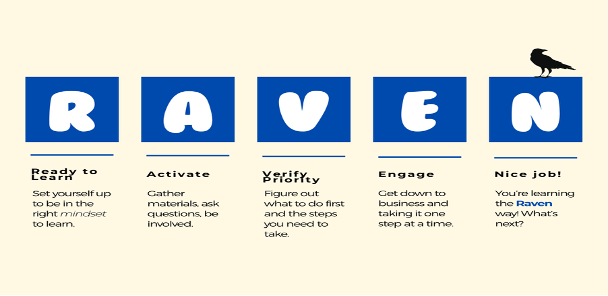
Ready – Social Emotional Learning (Alt. Get in the right headspace)
- Setting yourself up to be in the right mindset to learn
- Grounding exercises
- Breathing exercises (Eg. Box breathing)
- Establishing time to sleep (how about changing to “Establishing time for healthful behaviour like sleep, exercise, recreation, mindfulness” )
Activate – Materials, Participation, and Preparedness
- Completing the groundwork to become physically prepared to complete tasks.
- Gathering learning materials. (Eg. Notes, textbooks, agenda, pencil)
- Being present as an active, and engaged member of the class
- Asking questions to be clear on what you need to do.
- Take notes, participate in discussions, and ask questions
Verify Priority – Reviewing, Goal Setting, Establishing Order
- Looking at the instructions that were given to determine your next steps
- Determining the order of tasks to complete based on their importance
- Outlining the goals and steps you can take to accomplishing the task at hand
Engage – Getting down to business
- Create an environment that is conducive to completing the task at hand
- Break down larger tasks and take it one step at a time
- Finish the things you set out to do by utilizing the learning strategies
Nice Job! – The Finish Line
- Give yourself credit for the effort you’ve put in
- Reflect on your process that got you here (the positives, the setbacks)
- Ask for feedback
- Now that you have accomplished your task, what should you do next?
Homework Crunch or Feeling Stressed?
If you are feeling overwhelmed by school and you are stressed, anxious or are having difficulty coping, you are not alone. Many students in high school, college and university feel this way occasionally. If you stay organized and stick with it, you will be able to manage. If you continue to struggle, go to your teacher(s) or your counsellor and ask for help. Personal circumstances will be reasonably considered, and time extensions and other supports may be arranged to allow you to complete your work in a timely manner and to the quality you are able to produce. You must be responsible - the earlier you go to talk about your situation, the better we are able to help. Remember, developing resiliency means having a plan to cope with adversity – you can do this and we will help. We care about you and we want you to learn and succeed!
Setting Goals:
Successful people set goals for themselves. Good advice is to “begin with the end in mind” and think about what you hope to accomplish. Goals should be realistic targets for improvement. With each goal we create, we should also think about an “action plan” for how we plan on achieving the goal and how we will know if we’ve reached it. It is also important to check back on your goals regularly to see how you are progressing and make adjustments if necessary. MacNeill students are encouraged to create 3 goals for the school year - a personal goal; an academic goal; and a volunteer or social responsibility goal.
Personal Goal (an improvement goal about ME):
__________________________________________________________________________________
__________________________________________________________________________________
__________________________________________________________________________________
Learning Goal (a school goal):
__________________________________________________________________________________
__________________________________________________________________________________
__________________________________________________________________________________
Social Responsibility Goal (a get involved, help or join or a ‘make a difference’ goal):
__________________________________________________________________________________
__________________________________________________________________________________
__________________________________________________________________________________